Refractive Errors
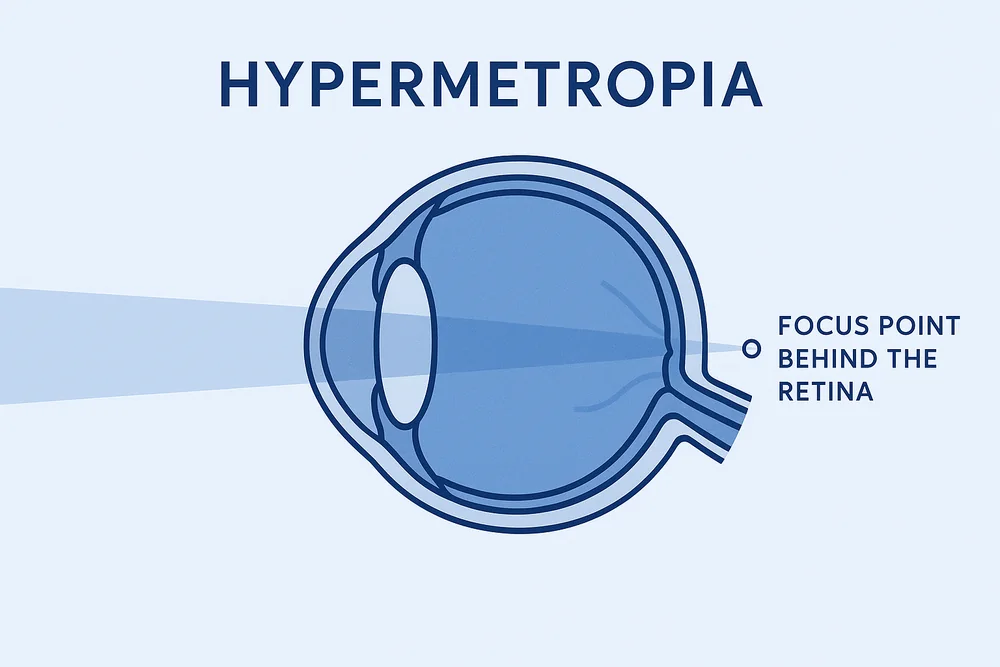
Hypermetropia
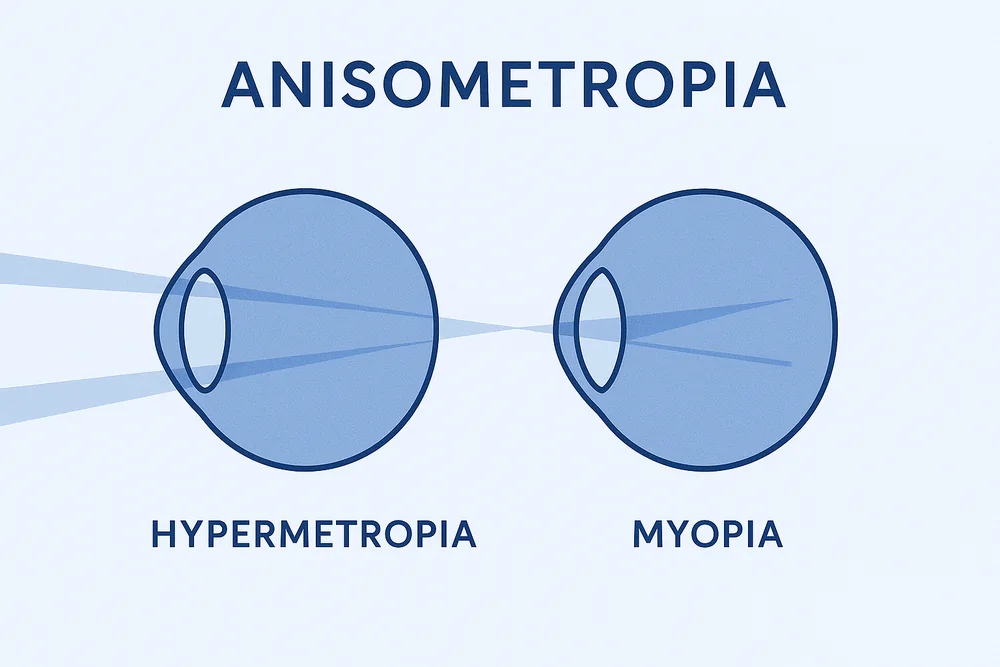
Long-sightedness, also known as hyperopia, is a common eye condition that makes nearby objects appear blurry. It occurs when the eye doesn't bend light correctly, causing the visual image to focus behind the retina instead of on it. This can be due to the eyeball being too short or the cornea having too little curvature.
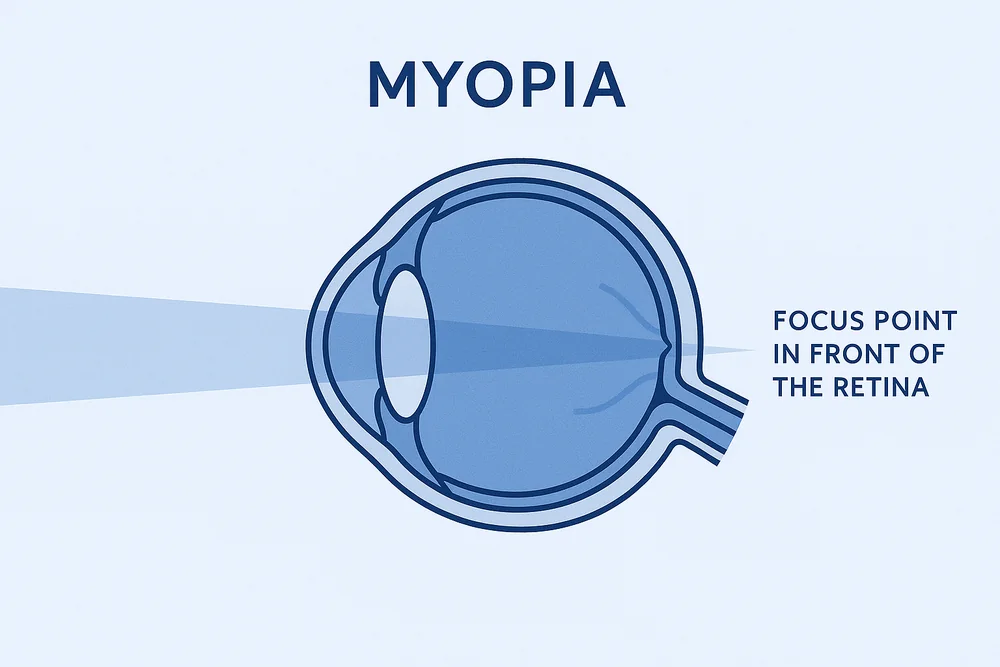
Myopia
Myopia, also known as short-sightedness, is an eye condition where light from distant objects focuses in front of the retina, instead of on it. As a result, distant objects appear blurry, while close objects appear normal. Other symptoms may include headaches and eye strain.
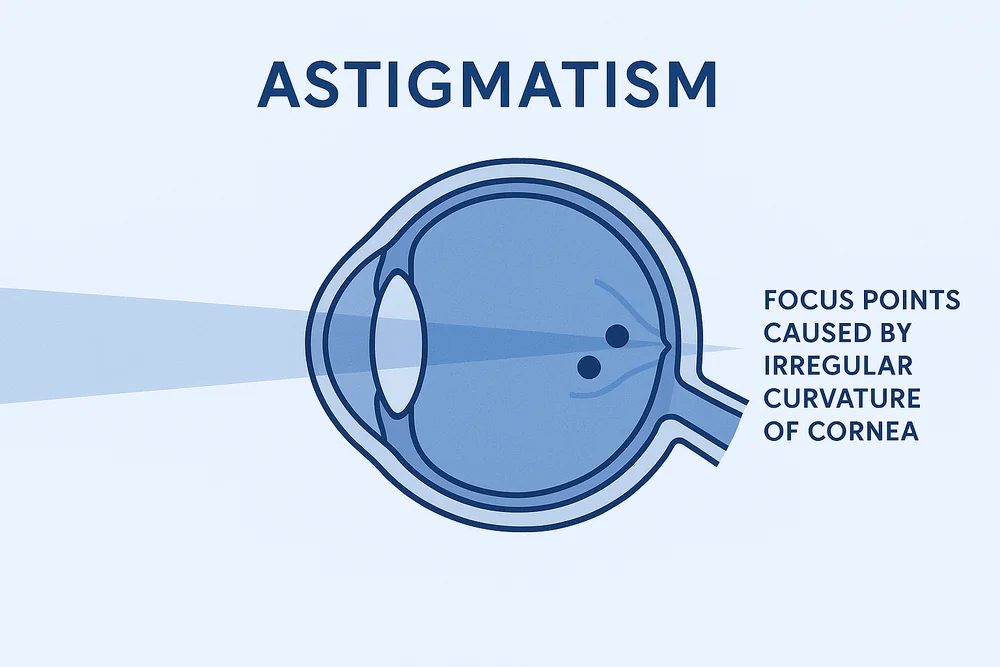
Astigmatism
Astigmatism is a vision condition that occurs when the cornea or lens is irregularly shaped, preventing light from focusing correctly on the retina.
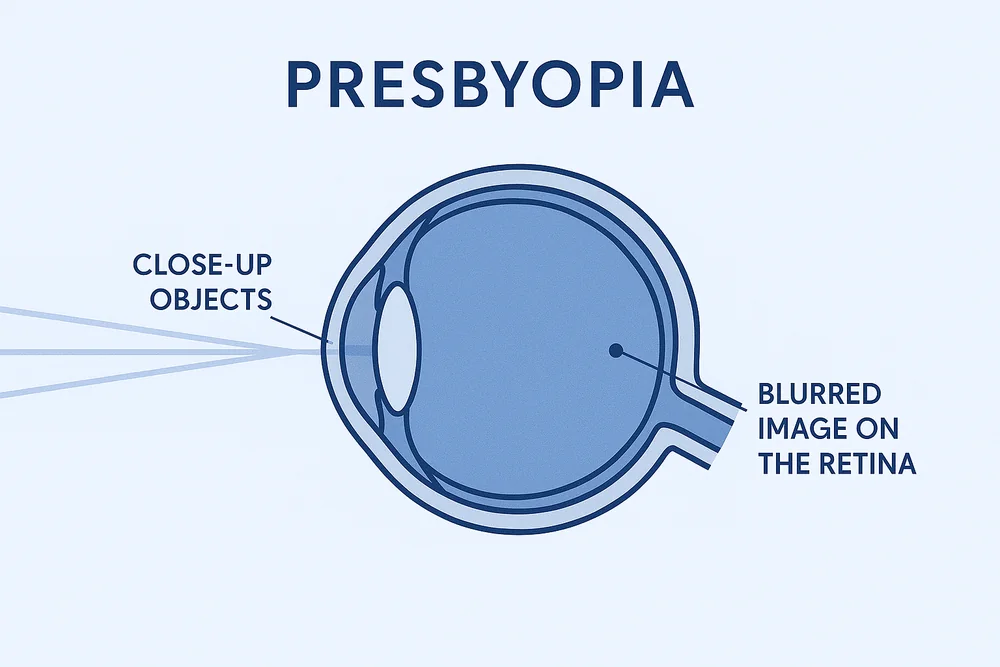
Presbyopia
Presbyopia is a natural age-related condition where the eye's ability to focus on close objects decreases, typically starting in the mid-to-late 40s. This occurs because the lens inside the eye loses its flexibility, making it harder to adjust for near vision. While it's a normal part of ageing, it can make reading and other close-up tasks challenging.
Anisometropia
Anisometropia is a visual condition where the eyes have different refractive powers, causing one eye to appear blurrier than the other. The term comes from Greek and literally means "the measure of vision is not equal". It's usually defined as a difference of one dioptre or more in spherical equivalent (SE) between the eyes.
Common Eye Conditions
Cataracts
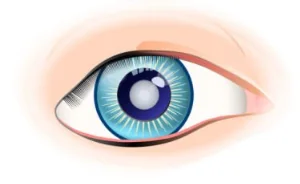
Cloudy patches that develop in the lens of your eye.

Glaucoma
Build-up of pressure in the eye affecting vision.
Dry Eye
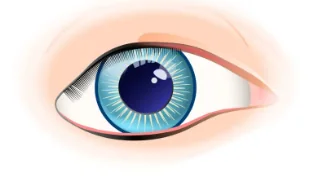
Caused by problems with tear production or drainage.
Blepharitis
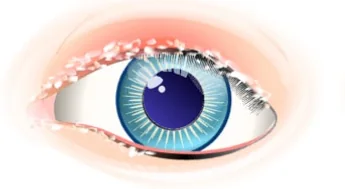
Inflammation of the eyelid edges.
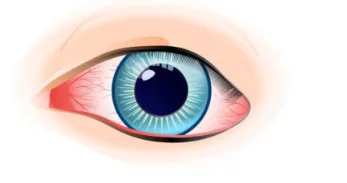
Conjunctivitis
Often referred to as red eye.
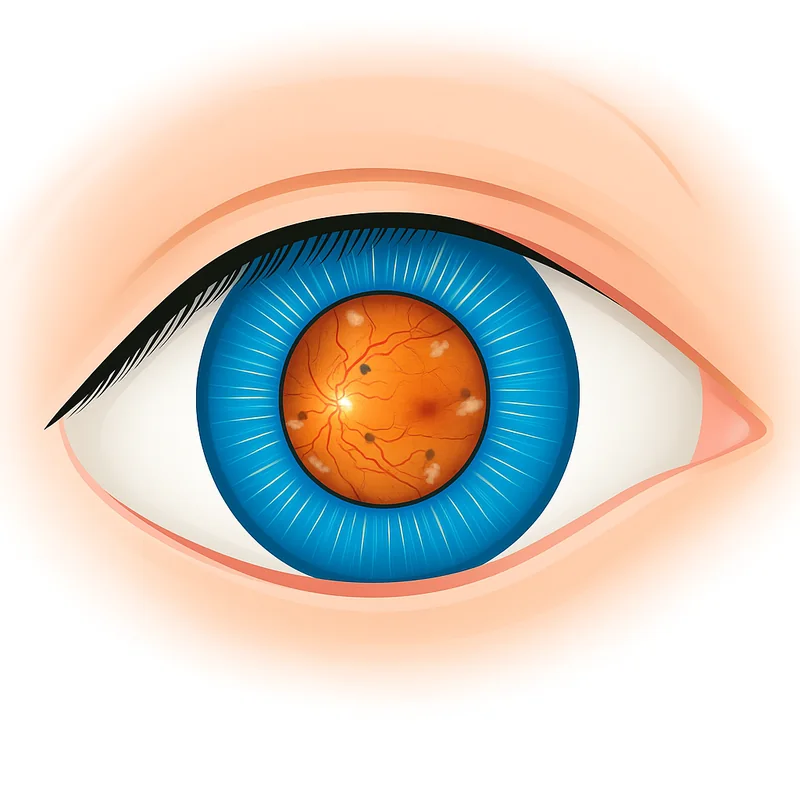
Flashes and Floaters
Light flashes or floaters like spiders/tadpoles.
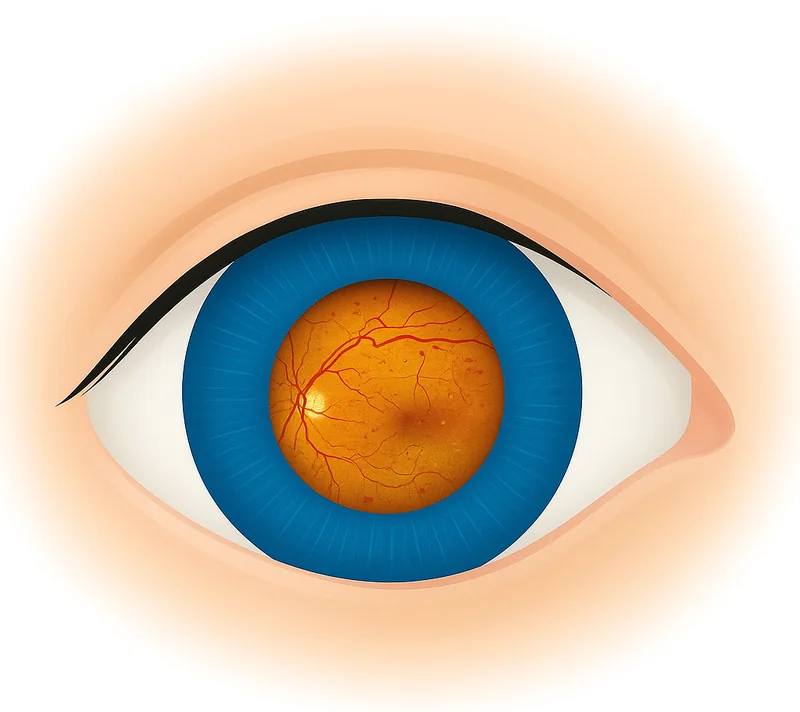
Diabetic Retinopathy
High blood sugar damaging back eye cells.
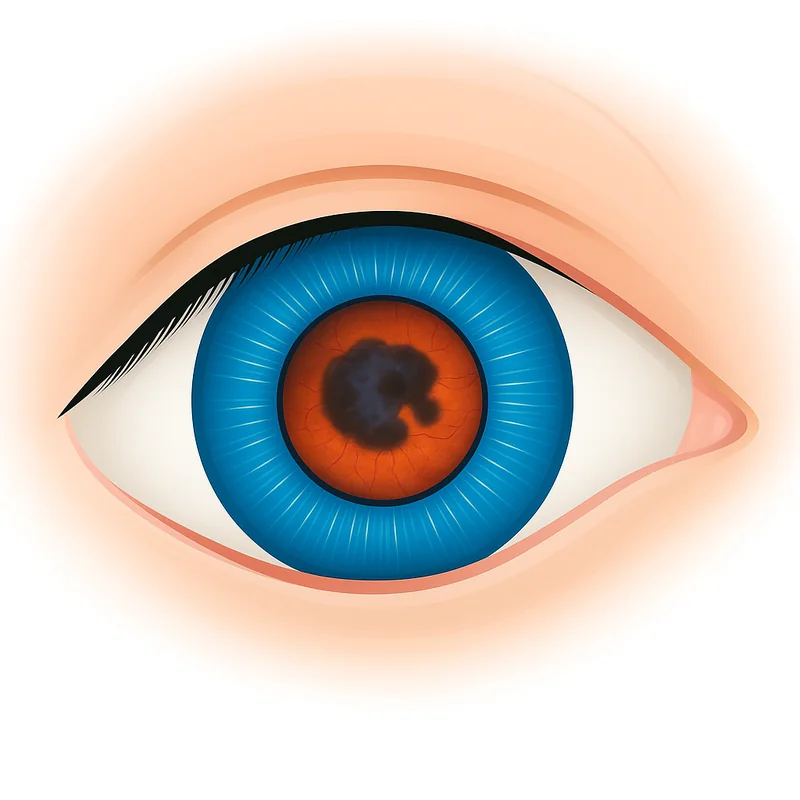
Macular Degeneration
Causes loss of central vision.
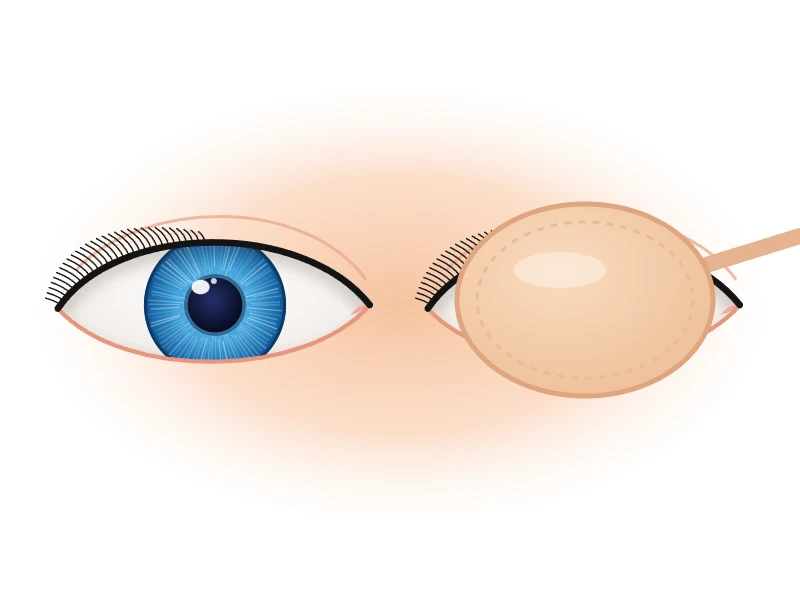
Lazy Eye
When one eye doesn't develop normal sight in childhood.
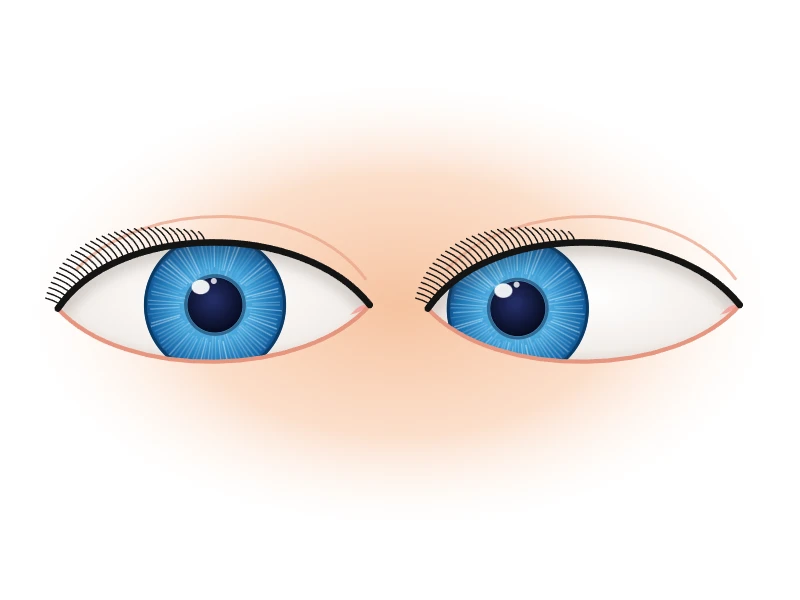
Squint
When the eyes point in different directions.
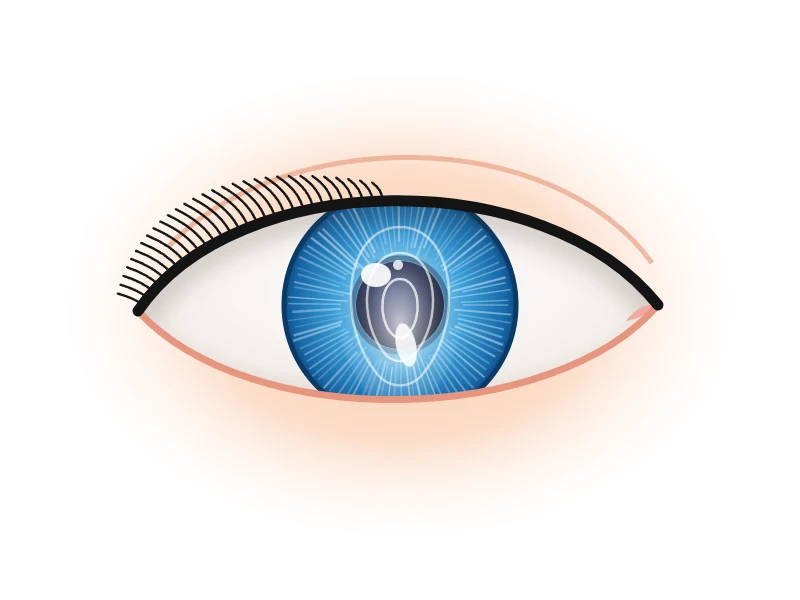
Keratoconus
When the clear front of the eye thins and bulges.
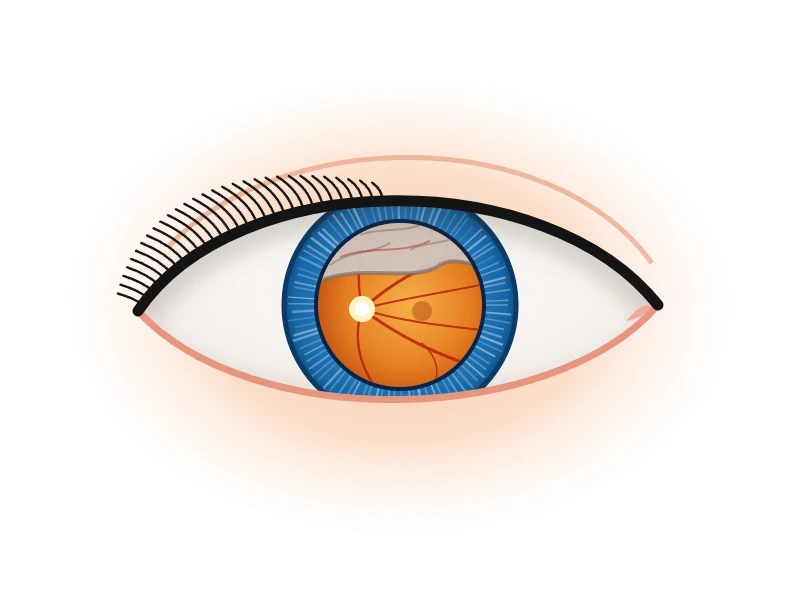
Retinal Detachment
When the retina pulls away from the back of the eye. This is an emergency.
See through their eyes
Choose a condition to see how it can change everyday sight, then move the slider from early to advanced. Many of these changes happen so slowly that people don't notice them, which is why regular eye tests matter.
Cataracts: Everything looks cloudy, faded and slightly yellow, and bright light causes glare. Cataract surgery usually restores clear sight.
These pictures are an illustration only. Everyone's sight is different, and many people don't notice changes until they are advanced. An eye test can spot most of these conditions early.